One afternoon, just as I was leaving the hospital after my regular visits, the resident social worker, Miss Li, hurriedly ran up to me.
“Venerable,” she said breathlessly, “we just received a call from Mrs. Zou Ling. She is asking for a monastic to chant for her family member, who is nearing the end of life. Could you go to the ward now?”
“Of course,” I replied, and immediately phoned Mrs. Zou to learn more.
Mrs. Zou, a devoted Buddhist, explained that the patient was her mother-in-law, Madam Zhang. Zou’s husband had already passed away, and their only son lived in Australia. In Hong Kong, only she and her mother-in-law remained, relying on each other for support.
I asked gently, “How has your relationship with your mother-in-law been?”
She answered with honesty: “Not good.” Then she explained. Madam Zhang, though she had only one son, was distant in temperament, stubborn, and deeply attached to material concerns. Their relationship had long been difficult. Yet after encountering the Dharma, Zou came to understand that close family bonds are often shaped by unresolved karmic ties from past lives. She resolved to practice patience and forbearance, gradually softening the strained relationship. In recent years, the bond between them had begun to improve.
That morning, when visiting the hospital, Zou found Madam Zhang burning with fever and drifting in and out of consciousness. The nurses warned her that the situation was grave and she should prepare for the worst. Seeing that her mother-in-law was approaching the end of her life, Zou let go of past grievances. She wished only to accompany her peacefully on this final journey and bring closure to their karmic connection. Grateful for the presence of a monastic, she hoped that chanting would help her mother-in-law release her attachments and pass on to a wholesome rebirth.
When we entered the ward, we were surprised to find Madam Zhang lucid and alert. Seeing me, she smiled and said, “Avalokiteshvara Bodhisattva has arrived.”
I replied softly, “You look well today. Let us recite ‘Namo Avalokiteshvara Bodhisattva’ together. You may chant aloud or silently in your heart.” Taking her hand, I led everyone in chanting for about ten minutes.
Gradually, Madam Zhang’s expression grew calm and serene. Seizing the moment, I said, “Your daughter-in-law is very filial. It was she who invited me to come and bless you.” Madam Zhang’s face softened. In a low voice, she said, “I have only this one daughter-in-law. She has been good to me. I made mistakes in the past. I want to make amends.”
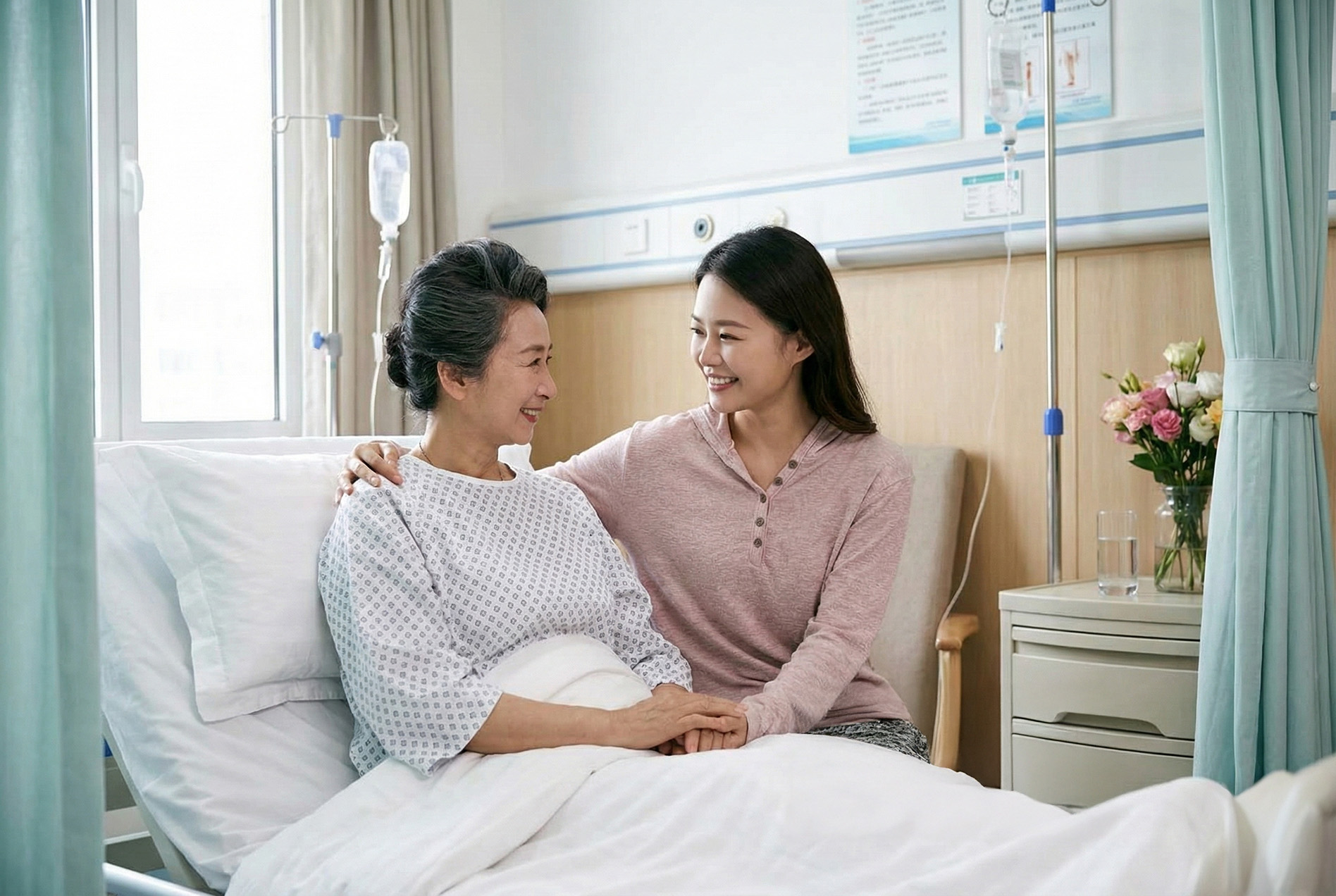
Hearing this, I immediately asked Zou to take her mother-in-law’s hand. The two women clasped hands, and though no words were spoken, the room was filled with warmth.
But before long, Madam Zhang’s face darkened. She shook off Zou’s hand, her expression clouded with resentment. “Why didn’t you listen to me? Why didn’t you buy a flat for my grandson? He left without even telling me. You have all treated me poorly…”
For a moment, I was at a loss. Zou then explained that her mother-in-law’s greatest concern had always been her grandson. Madam Zhang had once insisted she sell her apartment so that the boy could buy a home. Zou had been reluctant, but after much persuasion, she sold the flat, enabling him to settle down. Recently, upon hearing of his grandmother’s illness, the grandson had flown back from Australia to visit her. When he left, he found her asleep and did not wake her. This unspoken farewell left Madam Zhang deeply upset, and she misdirected her anger toward Zou.
I suggested that Zou lean close and speak directly into her mother-in-law’s ear: “I have already sold the apartment and bought a flat for your grandson. His life is stable now, and his career is going well. You can rest assured.”
Hearing this, Madam Zhang nodded, her face relaxed, and she closed her eyes in tired repose. I reminded Zou to arrange video calls during future visits so that Madam Zhang could see her grandson and find greater comfort.
Zou then asked me how long her mother-in-law might have left. I answered gently, “From my many years of experience in end-of-life care, I would estimate two to three weeks. We must make use of the moments when her mind is still clear and guide her to release attachments.”
Zou nodded firmly. She resolved to fulfill her duty as a daughter-in-law, visiting daily, reciting sutras at her bedside, and praying that her mother-in-law would receive the blessings of the Buddhas and Bodhisattvas and be reborn into a better realm. “This bond of mother-in-law and daughter-in-law is itself a karmic connection,” she reflected. “I only hope that through kindness I can resolve our past grievances, so that our meeting in this lifetime will not have been in vain.”
Postscript
In many families, unresolved grievances and unspoken tensions can weigh heavily on the heart. The Dharma teaches us to regard both resentment and affection with an equal mind. Toward karmic debts carried from past lives, we should face them willingly, whether in the spirit of repayment or gratitude. Toward new resentments in this life, we are should respond with compassion, patience, and tolerance.
In this way, Zou’s filial devotion and her willingness to repay resentment with kindness in caring for her mother-in-law shine as an inspiring example for all of us to follow.
