“Hard it is to meet, and hard to part;
The east wind weakens, and the flowers depart.
The spring silkworm spins till death its silken thread;
The candle’s tears dry only when its flame is dead.
At dawn, mirrors bring grief for hairs turned gray;
At night, recited verses feel the moon’s cold ray.
The road to Penglai Mountain is not so far;
May the Blue Bird oft bring news from where you are.”
—Li Shangyin, “Untitled,” Tang Dynasty
Reading this poem naturally stirs a feeling of sorrow. Its verses express the pain of separation felt by loving couples, relatives, or friends. Its images of parting, fading flowers, exhausted tears, greying hair, and the chill of night all convey a deep sense of melancholy and impermanence. Yet, dear readers, have you considered that the sorrows of life’s meetings and partings can also inspire us to cherish the present, help us let go of attachment, and serve as supportive conditions for spiritual practice and awakening?
Indeed, life is impermanent and full of meetings and partings. All things in the world arise, cease, and change from moment to moment. Sentient beings undergo birth, aging, illness, and death. Mountains, rivers, and the earth itself pass through formation, abiding, decay, and dissolution. The natural world moves through spring, summer, autumn, and winter.
Now, let us first contemplate the scene described in the poem, and then, through its joys and sorrows, meetings and partings, reflect on the truth of impermanence together.
“Hard it is to meet, and hard to part.”
Each day, as we rush and toil to sustain our lives, opportunities to see one another are few. Therefore, the poem laments, “Hard it is to meet, and hard to part.” Precisely because meeting is difficult, parting becomes even harder to bear. After today’s farewell, who knows when we will meet again?
“The east wind weakens, and the flowers depart.”
The farewell takes place in late spring. The east wind has lost its strength, and the flowers have begun to wither and fade. The following four lines may be read as tender words exchanged by two people who are about to part
“The spring silkworm spins till death its silken thread.”
Here, the Chinese word for “silk,” si, sounds the same as the word for “longing.” This is to say: “Just as the spring silkworm spins its silk until death, I will think of you always, to the end of my days.”
“The candle’s tears dry only when its flame is dead.”
The other person replies in kind: “I, too, will always think of you. I will rejoice and weep for you, like a brightly burning candle whose waxen tears dry only when it has burned itself out.”
“At dawn, mirrors bring grief for hairs turned gray.”
One may imagine a husband reminding his beloved: “Each morning, when you look into the mirror at your dressing table, remember to take good care of yourself. Do not let yourself grow frail from worry.”
“At night, recited verses feel the moon’s cold ray.”
The woman, in turn, offers her own gentle reminder: “Do not worry about me. I will take care of myself. I am more concerned that you will stay up late reading. Remember to dress warmly to guard against the chill of night.”
In this exchange, the two reveal their hearts and their care for one another. Their words are intimate and heartfelt.
“The road to Penglai Mountain is not so far;
May the Blue Bird oft bring news from where you are.”
Penglai Mountain refers to the immortal realm of Penglai, a place of supreme happiness and joy. These two lines are words of mutual comfort. Although the two must part for a time and leave this place of happiness, they will not be too far apart. Since “the road to Penglai Mountain is not so far,” they can still exchange letters frequently. The legendary Blue Bird will carry messages back and forth between them.
At this point, the earlier sorrow and distress open into hope. Although parting gives rise to sadness, without the sighs of farewell, how could there be the joy of reunion? Separation teaches us to cherish the present even more.
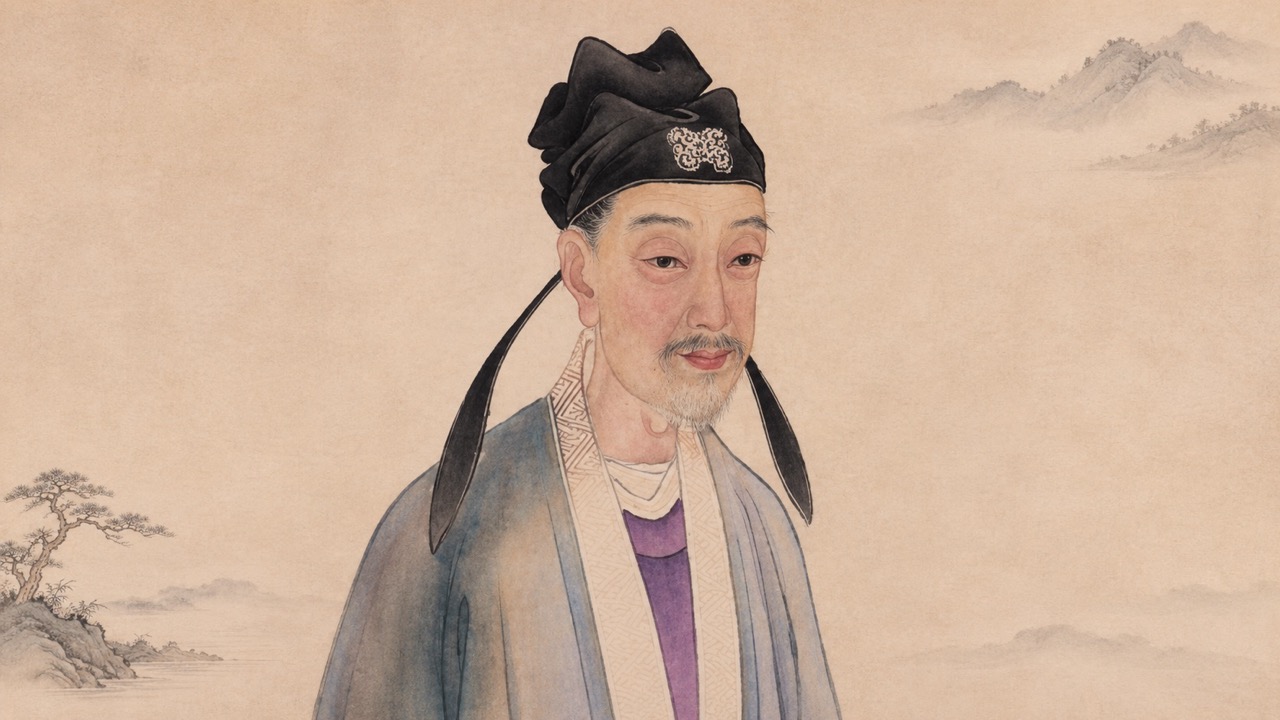
Who, then, was Li Shangyin seeing off when he wrote this poem? In truth, we need not assume that he was parting from his wife. Perhaps he was simply an observer, moved by the scene before him: a loving husband and wife saying goodbye, or lovers seeing one another off. Stirred by the moment, he expressed these feelings in verse.
All things flow and change without pause. Nothing remains fixed or permanent. How much more, then, are relationships between men and women subject to change? An ancient master once said, “Without deep attachment, one would not be born in the Sahā World.” Ordinary beings are born into this Sahā World because they are entangled by the karmic force of love and desire from past lives.
The mutual attachment between lovers or spouses is called “the bonds of affection” in the Buddhist scriptures. People of the world become immersed in romantic love and bound by affection, unable to break free. Thus, they continue to revolve within the Six Paths of Rebirth.
As fascicle 22 of the Fayuan Zhulin, A Forest of Pearls in the Dharma Garden, states:
“Drifting through the Three Realms,
One cannot escape the bonds of affection.
To relinquish affection and enter the unconditioned
Is truly to repay kindness.”
Buddhism teaches that we should relinquish the bonds of affection and enter the Buddha’s Path. Only by entering the Buddha’s Path can one truly repay kindness.
On the surface, the joys and sorrows, meetings and partings described in the poem seem to lament the impermanence of human life. Yet impermanence should not be understood negatively. The Buddha awakened to the impermanence of life; because of this, he gave up worldly glory, left the household life, and cultivated the Way.
The Mahāparinirvāṇa Sūtra states:
“All conditioned formations are impermanent;
They are phenomena of arising and ceasing.
When arising and ceasing are extinguished,
Quiescent extinction is bliss.”
Impermanence has a positive and encouraging meaning for human life. It enables us to recognize the suffering of human existence, awaken to the truth that all things arise through dependent origination and are empty of inherent nature, and find the resolve to let go of attachment to love and desire. It encourages us to study and practice the Buddha-Dharma, transcend birth and death, and realize the bliss of Nirvāṇa.
Therefore, impermanence contains infinite hope and vitality. It is the most real and most intimate truth.
