
Translated By Tony Qin
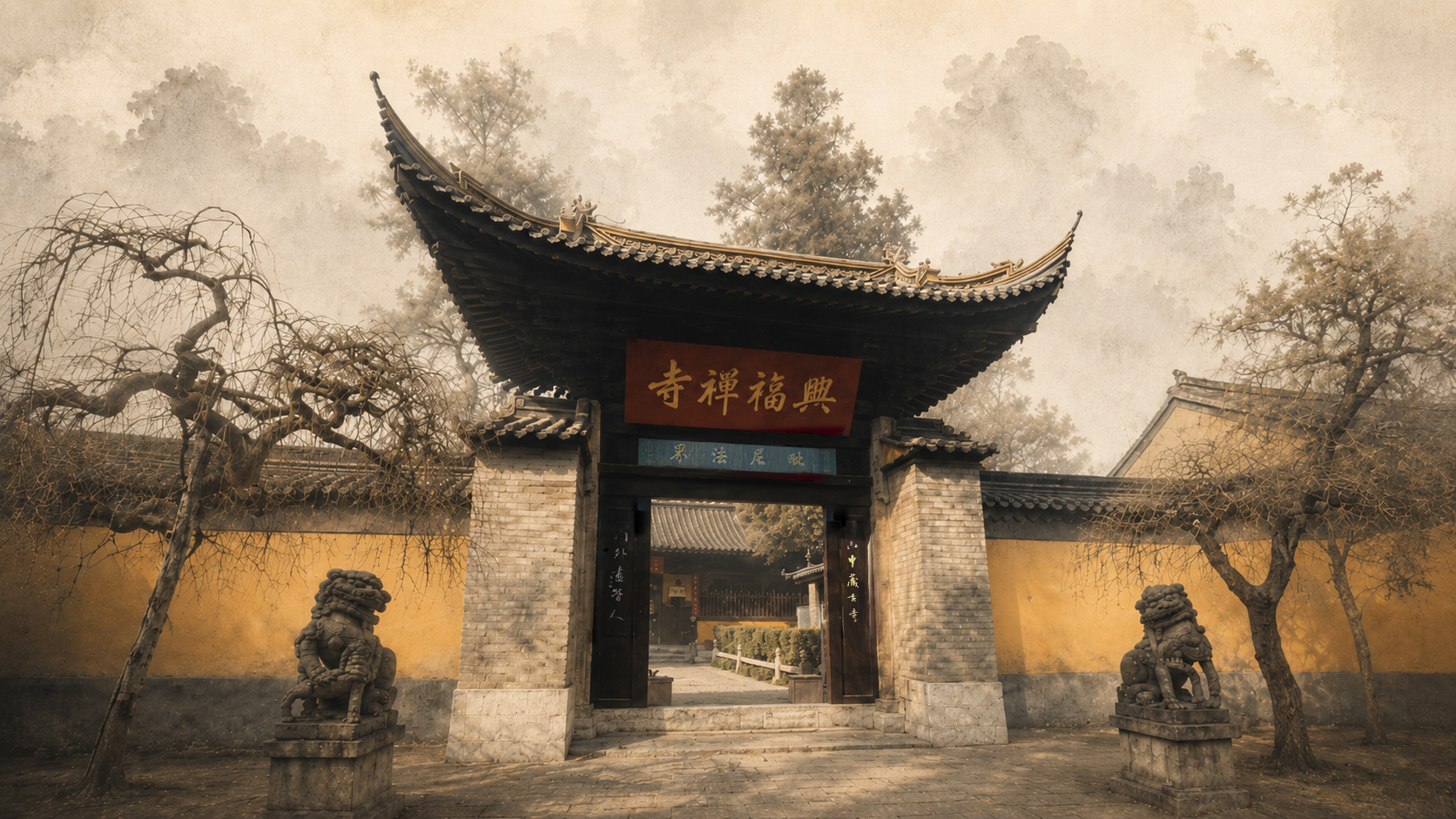
The Tang Dynasty poet Chang Jian often visited Zen temples alongside his literary peers, Wang Wei and Wang Changling. His poem, Inscribed on the Zen Courtyard Behind Poshan Temple, is celebrated for its ethereal beauty transcending the dust of the mundane world:
Entering the ancient temple at daybreak,
The tall forest lit by the dawn,
A winding path leads to the secluded retreat,
Where the Zen chamber lies deep amid flowers and trees.
The mountain’s radiance gladdens the birds,
The pool’s reflections empty the mind.
Here, ten thousand sounds fall silent,
Leaving only the tolling of the bell and chime.
As the poet arrives at the ancient temple at daybreak to pay homage and meditate, his heart is filled with joy. Tracing the steps upward, he sees the towering woods bathed in the morning light. Passing along a winding, quiet path, he discovers the Zen chamber hidden deep within the lush greenery. This forms the opening lines:
“Entering the ancient temple at daybreak,
The tall forest lit by the dawn,
A winding path leads to the secluded retreat,
Where the Zen chamber lies deep amid flowers and trees.”
Chang Jian was a close friend of the poet Wang Wei, a devout Buddhist who maintained a vegetarian diet, observed the precepts, and was a highly respected Zen lay practitioner. Influenced by his friend, Chang Jian also embraced the practice of Zen meditation. Seeing the secluded Zen chamber naturally reminded him of the merits of this stillness. As the saying goes: “A single stick of pure incense holds the infinite Dharma; laying down all worldly ties, one contemplates deeply: ‘Who is the one reciting the Buddha’s name?'”
Along the path, the mountain scenery is pure and bright, the birds freely singing. As he arrives at the clear pool beside the chamber, the deep reflections in the water instantly empties his entire body and mind, turning it as clear and pristine as the pool itself. Hence, the poet writes:
“The mountain’s glow gladdens the birds,
The pool’s reflections empty the mind.“
Immersed in the morning temple, surrounded by flowers, trees, green hills, and the crystalline pool, all things return to silence. This silence of ten thousand sounds is not a stagnant, lifeless void, but a transcendent tranquility rising above the dust of the world. Movement and stillness merge seamlessly into one, completely dissolving the boundaries of discriminating thoughts.
At this moment, the only sounds are of the monks of Poshan Temple chanting the sutras. The resonant toll of bells and chimes drifts through the air—clear, melodious, and lingering. What this sound conveys is eternal stillness, the stillness of the True Essence, quietly merging the Zen poet’s meditative mind with the mind of the Universe in a depth beyond words.
During the golden age of the Tang Dynasty, landscape poetry usually praised the joy of seclusion with a tone of leisure and elegance. This poem, however, describes the experience of spiritual awakening during a temple pilgrimage. With the grace of landscape poetry and a natural style, its artistic expression differs from both the craftsmanship of Wang Wei and the plainness of Meng Haoran. It is rustic and deeply harmonious. It is not only rich in poetic emotion and picturesque imagery, but also layered with sparks of meditative insight, truly a classic of Tang Dynasty Zen poetry.
Stepping into the temple washed away the poet’s worldly distractions, instantly extinguishing mundane thoughts and filling his heart with spiritual joy. Looking back, it was as though he stood on the far shore of enlightenment, while the world of duality, conflict, and noise seemed like a fleeting, impure illusion.
Friends, if you are willing, may you also join us on the path of Buddhist practice, and let the refreshing water of the Dharma clear your minds of the dust of the world.
